After Jensen Huang's sudden resignation from Nvidia, one of the most common questions in the financial press is: is AI a bubble, and is it about to burst?
What is a bubble?
A bubble forms when the price of an asset or the value of an industry rises much faster than its real profits, because everyone expects it to be worth more tomorrow. The famous example is the dot-com bubble of 2000: the internet really did change the world, but many internet companies of that era went bust.
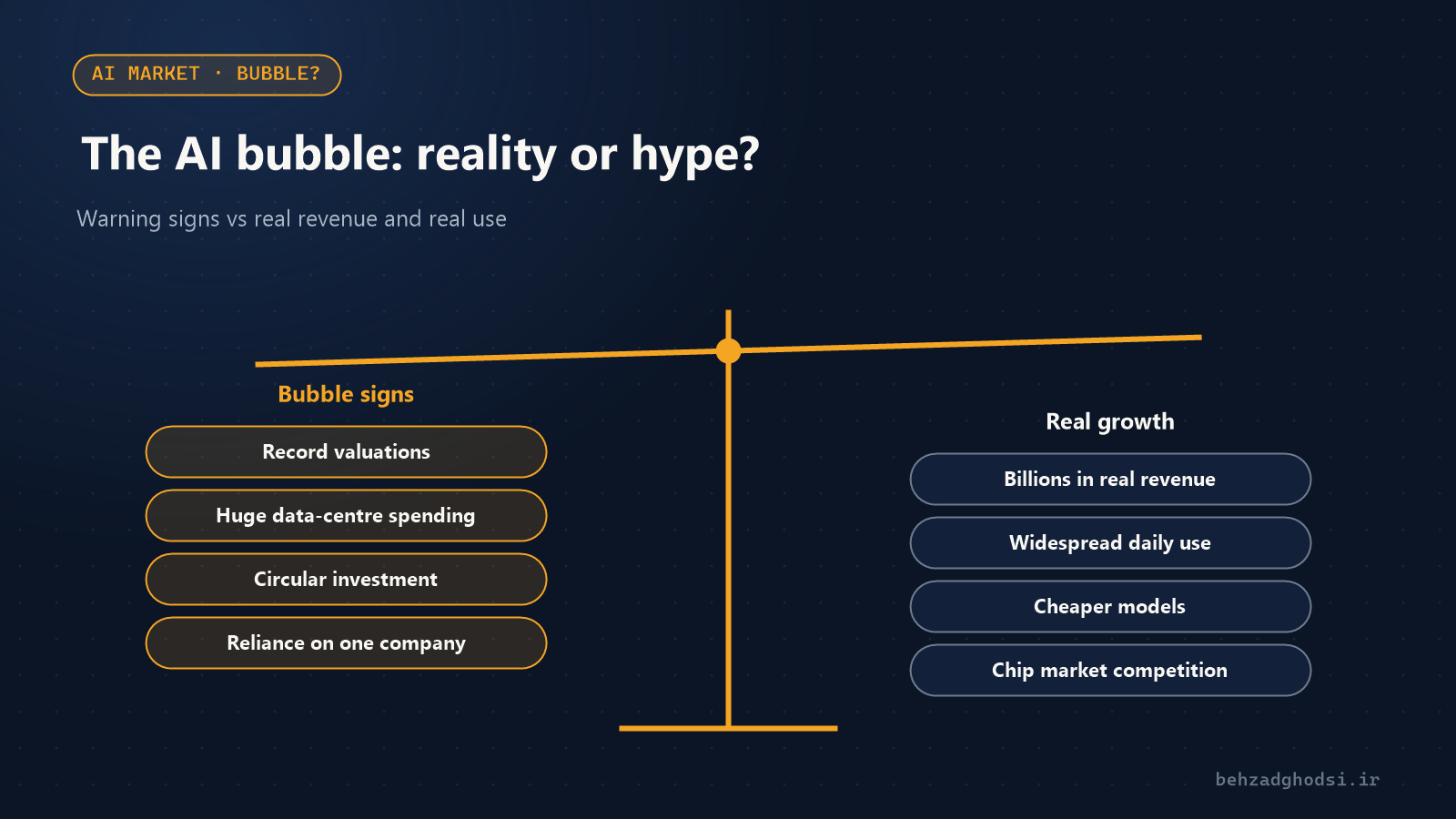
Worrying signs
- Unprecedented valuations: Nvidia's value had passed $4 trillion, and Anthropic is going public in its IPO at a valuation of about $1.2 trillion.
- Huge data-centre spending: companies are spending hundreds of billions of dollars on data centres and chips, while revenue from many AI products has not yet reached that scale.
- Circular investment: according to an analyst interviewed by AP, Nvidia invests in companies that are themselves customers for its chips; for example, it owns about 13% of CoreWeave. Critics say this makes demand look bigger than it really is.
- Dependence on one company: when news about one company's CEO can shake the whole market, risk is too concentrated.
Reasons it isn't just a bubble
- Real revenue exists: Anthropic earned $35.3 billion over the past 12 months, and thousands of companies each pay it more than $100,000 a year.
- Widespread everyday use: programming, customer support, translation and document analysis are already being done with AI, and model prices keep getting cheaper.
- Healthy competition: after the Nvidia news, shares of rivals such as AMD and Broadcom rose. Analysts say the chip market is moving from monopoly back to competition, which is healthier for the whole industry.
What it means for businesses
Even if the bubble bursts, the technology won't disappear, just as the internet didn't disappear after the dot-com crash. What gets hurt are companies built on hype without real profits. For a business, the practical advice is:
- Use AI for specific, measurable work, not because it is fashionable.
- Don't depend on a single service or model; keep the ability to switch between models.
- Keep important data and processes somewhere they won't be lost if one service shuts down.
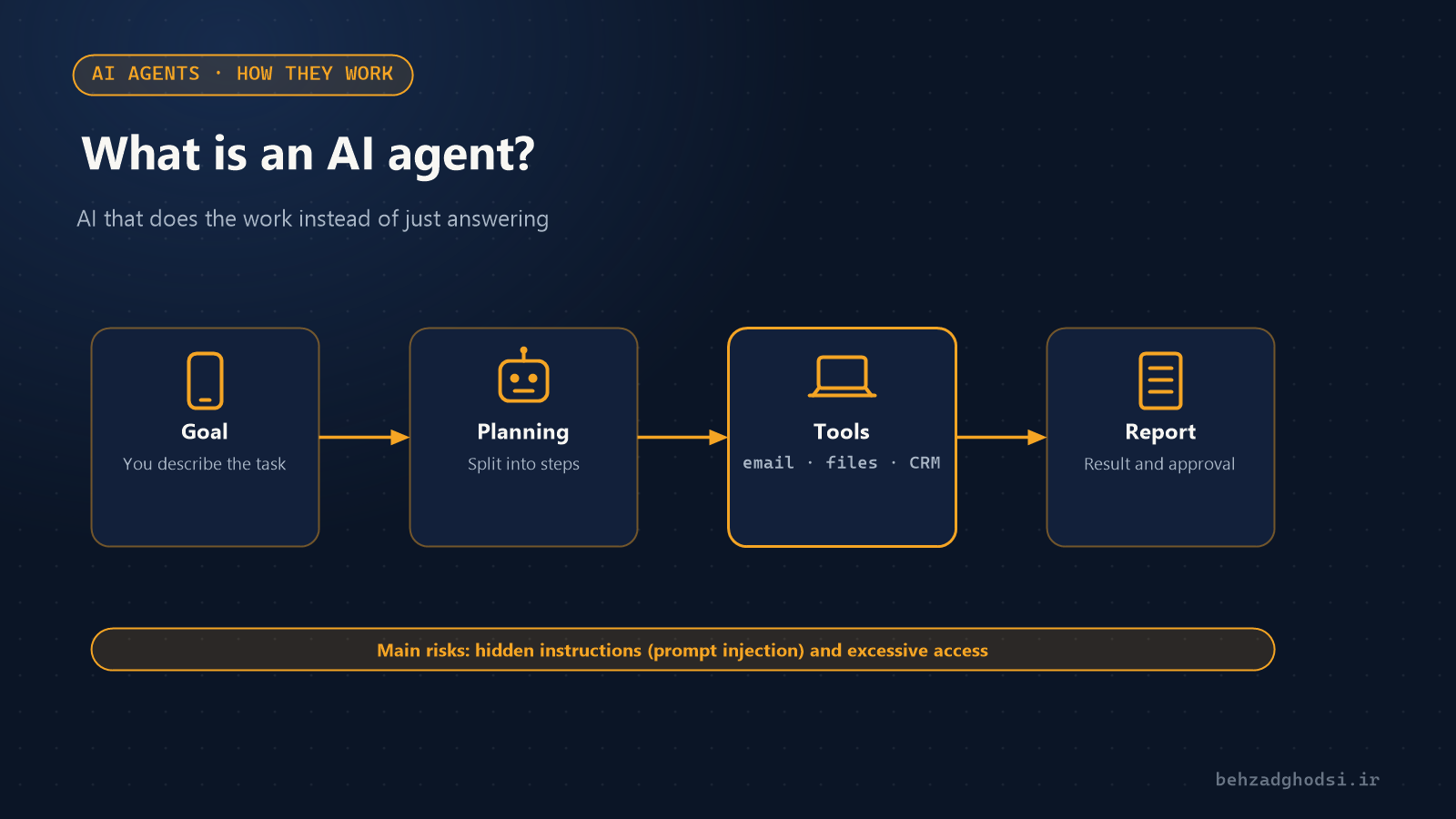
If you want to put AI to work in your company's processes, see the AI agent development service.
This is a news analysis, not investment advice.
Source: CP24 / Associated Press ↗